Marangu Route
The only route on Kilimanjaro with mountain hut accommodation, ideal for those seeking a shorter ascent through diverse landscapes and a unique way to experience the mountain
The Marangu Route offers a unique and rewarding way to climb Mount Kilimanjaro, known for its shorter itinerary options and comfortable mountain hut accommodation. It is the only route on Kilimanjaro where trekkers sleep in huts rather than tents, with shared dormitory-style accommodation along the trail. Beginning on the mountain’s southeastern slopes, the route passes through lush rainforest, open moorland and alpine desert, with spectacular views towards the distinctive peaks of Mawenzi and Kibo before ascending towards Uhuru Peak (5,895m), the highest point in Africa. Accompanied by experienced, English-speaking mountain guides and a dedicated support crew, you’ll enjoy a comfortable trekking experience, changing landscapes and the unforgettable achievement of standing on the Roof of Africa.
Why choose the Marangu route?
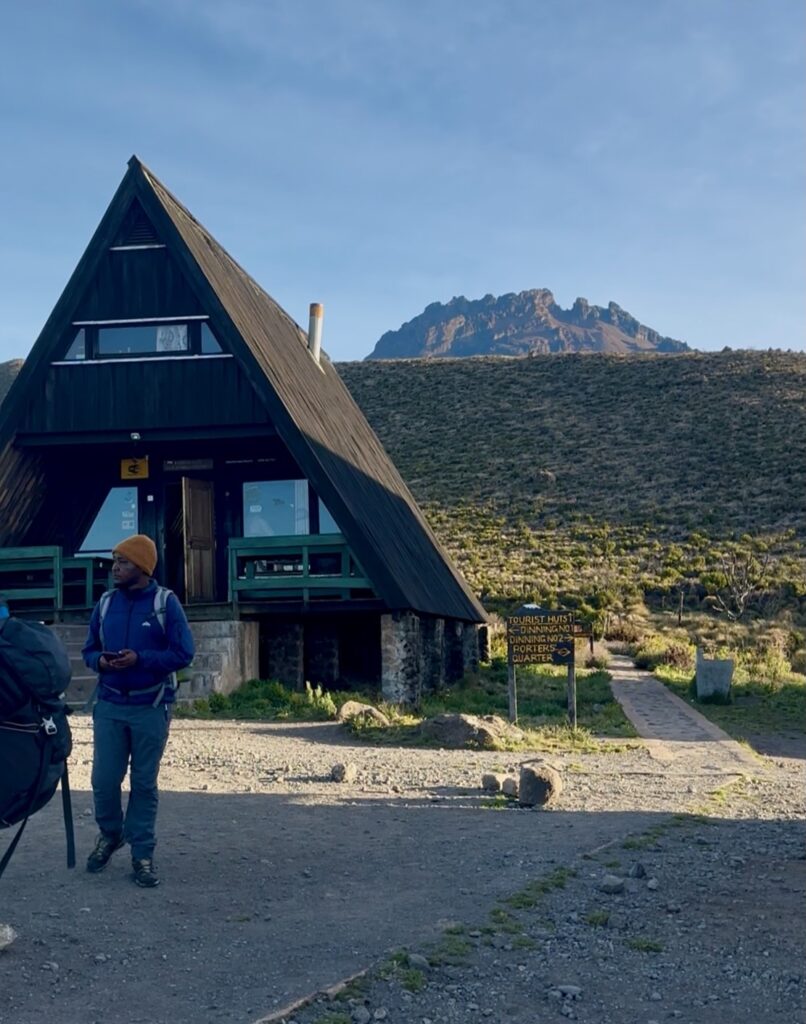
Mountain Hut Accommodation
The only Kilimanjaro route offering overnight accommodation in mountain huts, providing a more comfortable alternative to camping on the mountain.
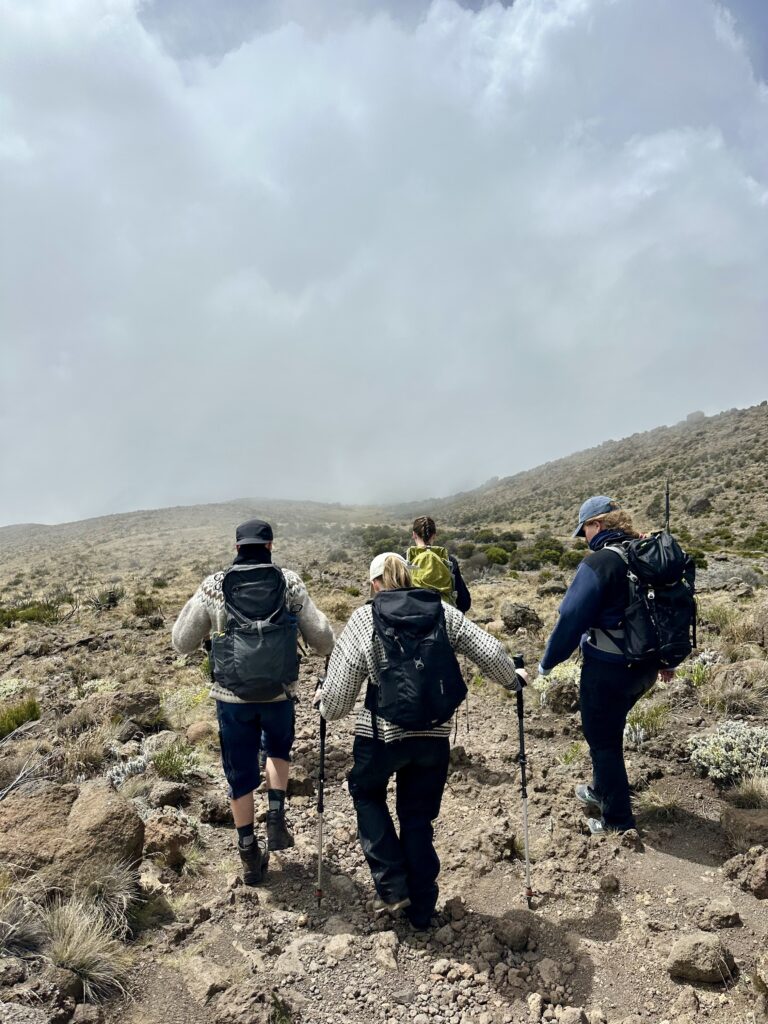
Shorter Itinerary Options
A shorter route for those with limited time, offering a rewarding Kilimanjaro experience without the longer commitment of other routes.
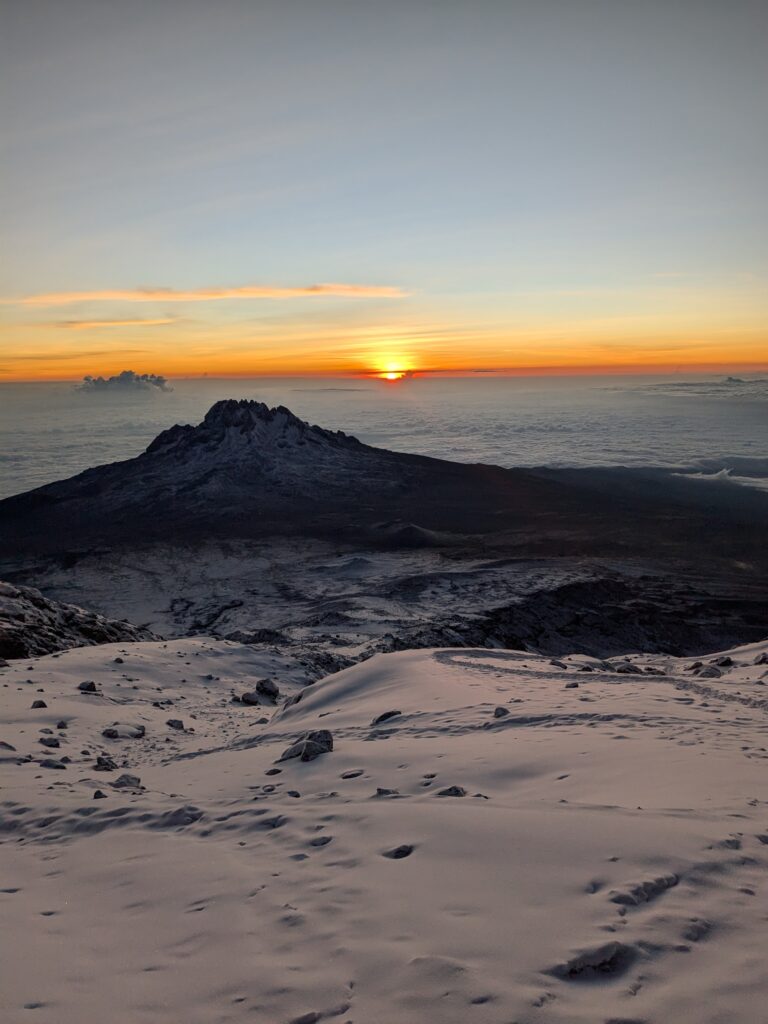
Iconic Mountain Views
Take in spectacular views of Mawenzi and Kibo Peak, Kilimanjaro’s two iconic volcanic cones, as you trek through the mountain’s changing landscapes towards Uhuru Peak.
The route at a glance
Duration
5-6 Days
Difficulty
Moderate
Best For
Hut accommodation & a gradual ascent
Summit Success
Up to 65%*
Crowds
Moderate
Start Point
Marangu Gate
*Estimated summit success rate. Success rates vary between operators and are influenced by itinerary length, acclimatisation, weather conditions and individual circumstances.
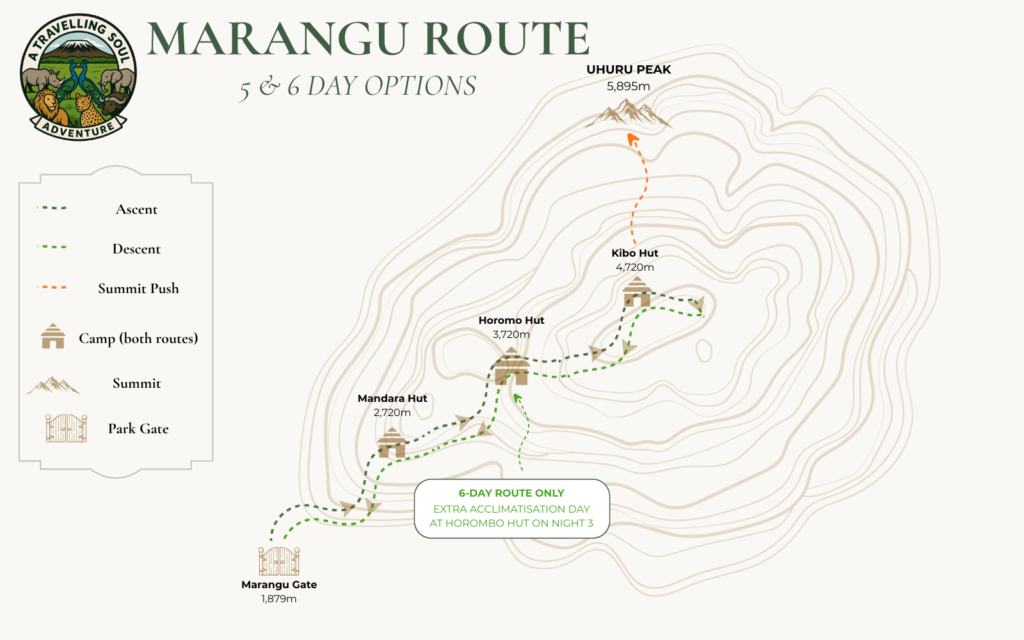
*Map not to scale. Route shown for illustrative purposes only*
Compare your Marangu options
Both itineraries follow the same traditional Marangu Route, with the 6-day option adding an extra day for a more gradual ascent and improved acclimatisation. Lets compare each route and see which one best suits your pace, trekking experience and summit goals.
5-Day Marangu Route
For a faster-paced ascent and trekkers looking for a shorter itinerary
- Duration: 5 Days / 4 Nights
- Difficulty: Moderate to Challenging
- Starting Point: Marangu Gate
- Accommodation: Mountain Huts
- Acclimatisation: Limited
- Summit: Uhuru Peak - 5,895m
- Distance: Approximately 70-72km
6-Day Marangu Route
For a more gradual ascent with an extra day for acclimatisation
- Duration: 6 Days / 5 Nights
- Difficulty: Moderate
- Starting Point: Marangu Gate
- Accommodation: Mountain Huts
- Acclimatisation: Good
- Summit: Uhuru Peak - 5,895m
- Distance: Approximately 70-72km
5-Day Marangu Route Itinerary
Distance: Approximately 70-72km
Meals: Full board (Breakfast, Lunch & Dinner)
Accommodation: Mountain huts (4 nights)
Day 1 - Marangu Gate to Mandara Hut
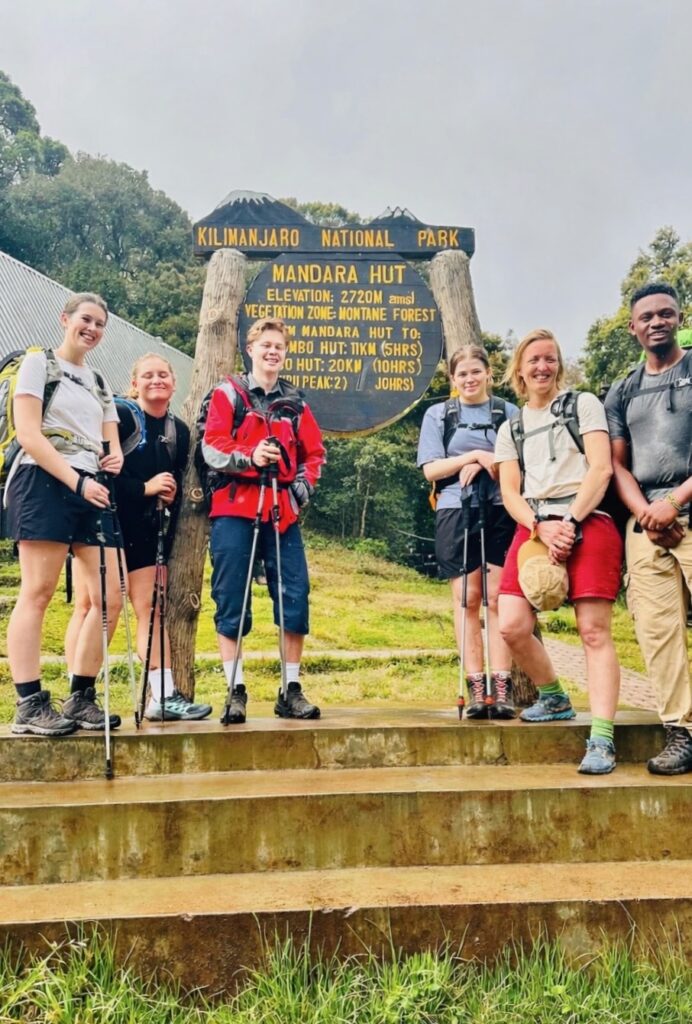
Elevation: 1,879m → 2,720m
Walking time: 3-4 hours
Distance: Approximately 8km
Meals: Lunch & Dinner
Accommodation: Mandara Hut
After breakfast at Green Mountain Hotel, you will meet your mountain team and begin your transfer from Arusha to Marangu Gate to complete park registration and formalities. Accompanied by your professional guides and dedicated mountain crew, you will begin your climb through the lush rainforest on Kilimanjaro’s southeastern slopes. The trail winds through dense vegetation, where you may spot colourful birdlife, black-and-white colobus monkeys and blue monkeys among the trees, before continuing uphill to Mandara Hut. Once at camp, you can relax and enjoy your first evening on the mountain before settling into your comfortable mountain hut for the night.
Day 2 - Mandara Hut to Horombo Hut
Elevation: 2,720m → 3,720m
Walking time: 5-7 hours
Distance: Approximately 11-12km
Meals: Breakfast, Lunch & Dinner
Accommodation: Horombo Hut
After breakfast, you will leave Mandara Hut and continue your ascent to Horombo Hut, gradually leaving the rainforest behind as you enter Kilimanjaro’s open moorland zone. The trail passes through grasses, heather and distinctive giant lobelias, with increasingly spectacular views towards the peaks of Mawnezi and Kibo. Continuing steadily uphill, you will arrive at Horombo Hut in the afternoon, where you can relax, enjoy dinner and settle into your mountain hut for a well-earned night’s rest ahead of the next stage of your ascent.
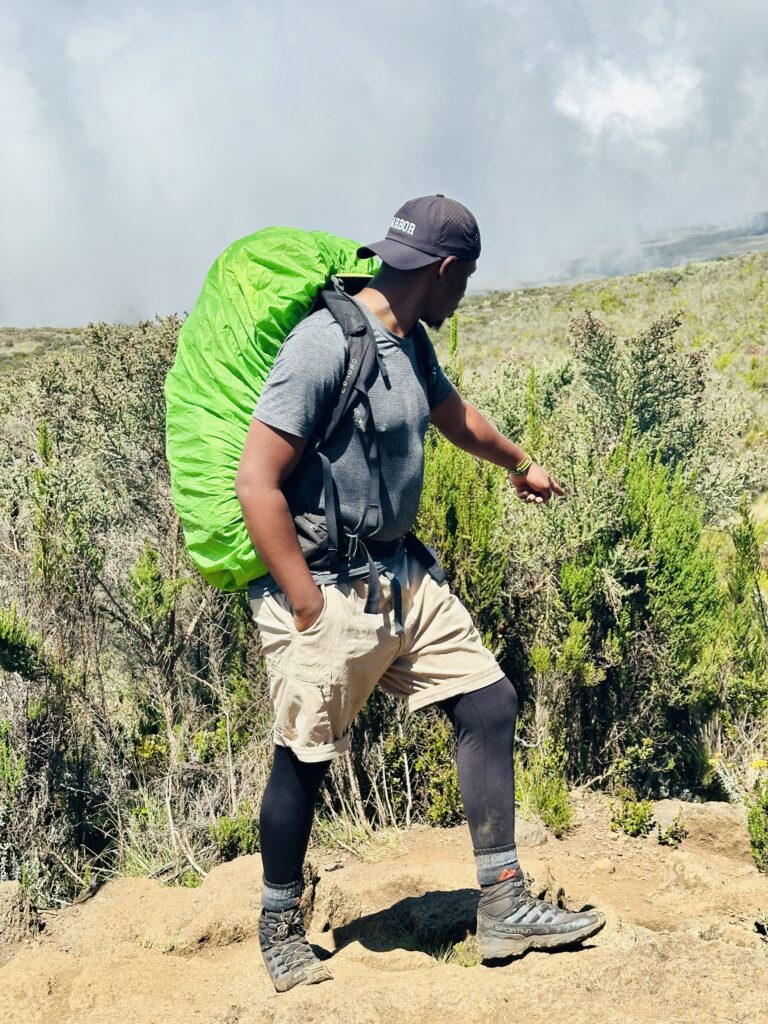
Day 3 - Horombo Hut to Kibo Hut
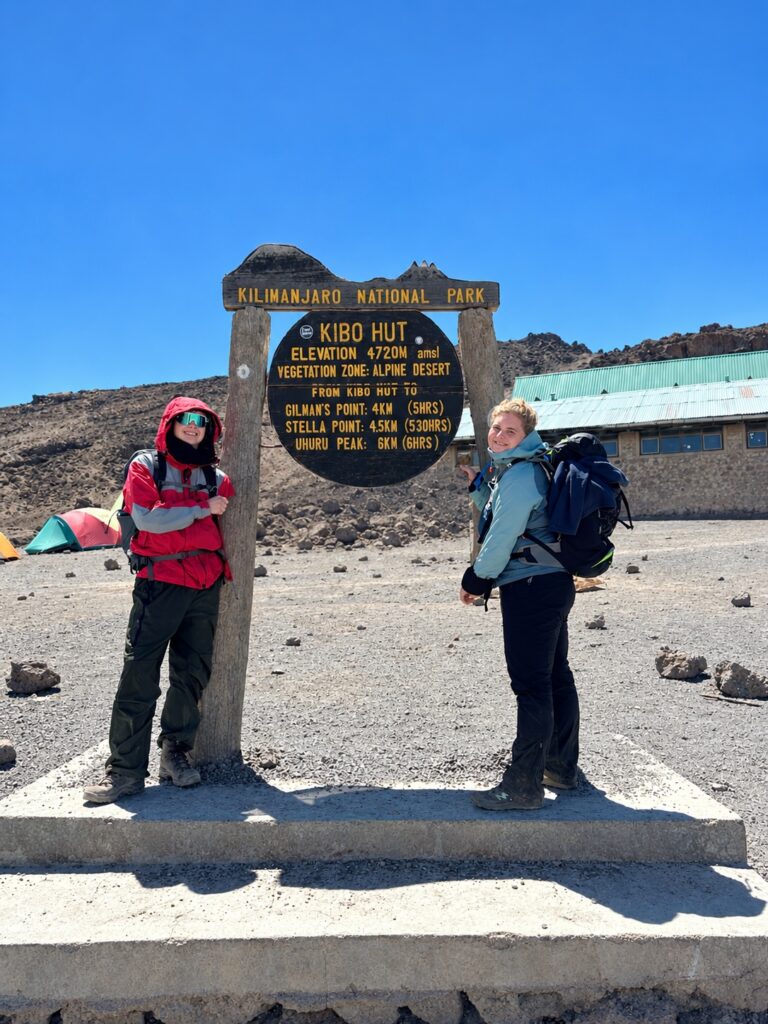
Elevation: 3,720m → 4,720m
Walking time: 5-7 hours
Distance: Approximately 9-10km
Meals: Breakfast, Lunch & Dinner
Accommodation: Kibo Hut
Today, you will leave Horombo Hut and continue towards Kibo, crossing the broad Saddle between the peaks of Mawenzi and Kibo. The vegetation gradually disappears as you enter Kilimanjaro’s alpine desert, creating a stark and dramatic landscape. With Kibo Peak rising ahead, you will continue towards Kibo Hut, your final accommodation before the summit. After an early dinner, we will gather you for a pre-summit briefing before preparing your gear for the night, before retiring to your tent for a few hours sleep.
Day 4 - Kibo Hut to Uhuru Peak to Horombo Hut
Elevation: 4,720m → 5,895m → 3,720m
Walking time: 10-15 hours
Distance: Approximately 19-21km
Meals: Breakfast, Lunch & Dinner
Accommodation: Horombo Hut
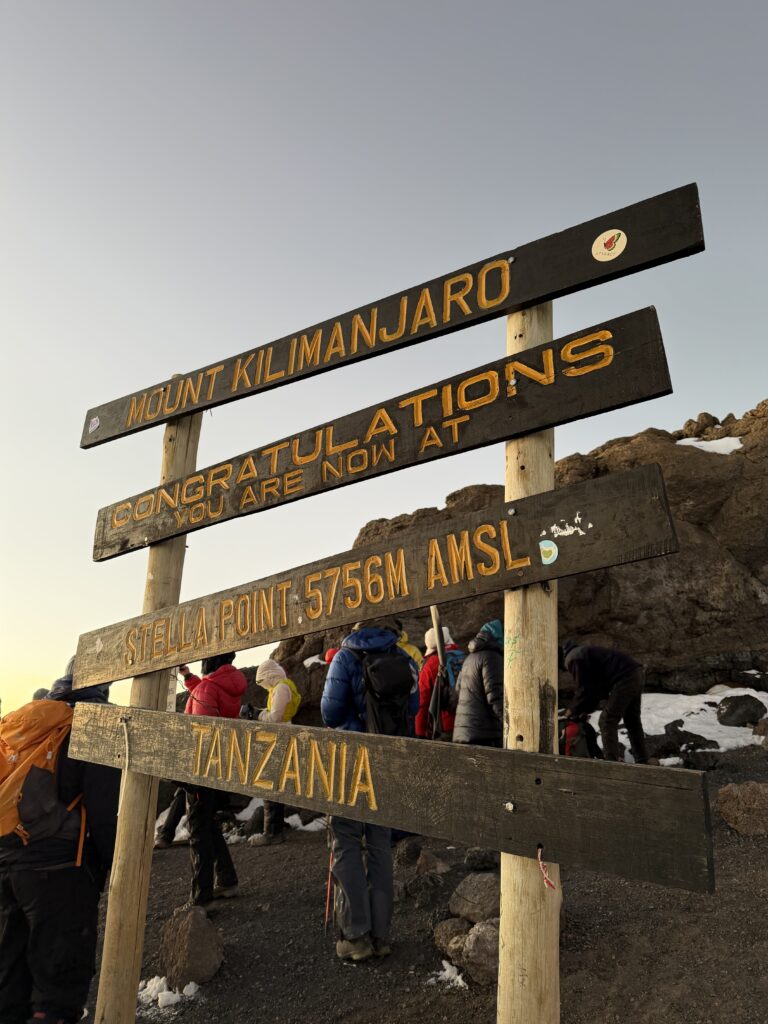
At around midnight, you’ll set off under a sky full of stars for the most challenging and rewarding day of the climb. The summit climb begins in darkness, ascending rocky terrain and steep scree towards Gilman’s Point (5,681m) on the crater rim, before continuing around the rim towards Stella Point (5,756m) and onwards to Uhuru Peak (5,895m), the highest point in Africa. While the trek itself is fairly simple, the high altitude makes even regular physical exercise feel strenuous. After celebrating your incredible achievement and taking in the unforgettable sunrise, you will descend back to Kibo Hut for a short rest and lunch, before continuing to Horombo Hut for a well-earned dinner and night’s rest.
Day 5 - Horombo Hut to Marangu Gate
Elevation: 3,720m → 1,879m
Walking time: 5-6 hours
Distance: Approximately 18-20km
Meals: Breakfast, Lunch & Dinner
Accommodation: Green Mountain Hotel, Arusha
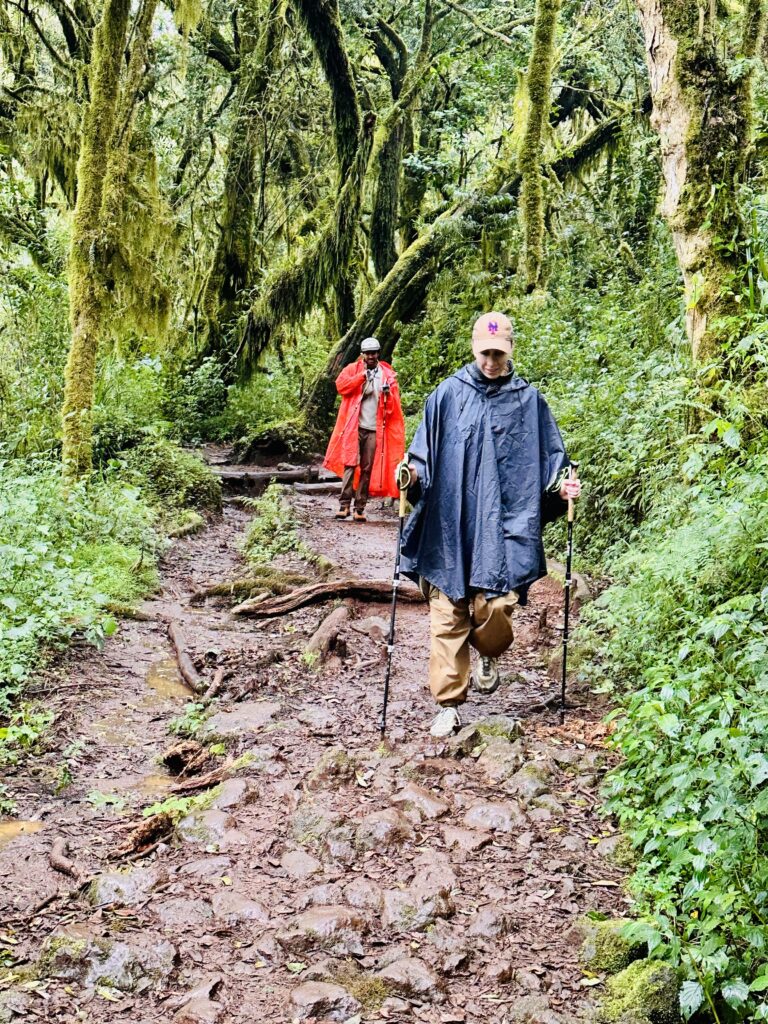
After breakfast, you will begin your final descent from Horombo Hut, retracting your route through the open moorland before gradually re-entering the lush rainforest of Mount Kilimanjaro. As you make your way downhill, you may once again spot colourful birdlife and black-and-white colobus monkeys among the trees. Upon arrival al at Marangu Gate, you will complete park formalities before heading for a well-deserved lunch with the team, where you will receive your summit certificates and celebrate your achievement. After lunch, you will be transferred back to Green Mountain Hotel in Arusha, marking the end of your Kilimanjaro adventure.
6-Day Marangu Route Itinerary
Distance: Approximately 70-72km
Meals: Full board (Breakfast, Lunch & Dinner)
Accommodation: Mountain huts (5 nights)
Day 1 - Marangu Gate to Mandara Hut
Elevation: 1,879m → 2,720m
Walking time: 3-4 hours
Distance: Approximately 8km
Meals: Lunch & Dinner
Accommodation: Mandara Hut
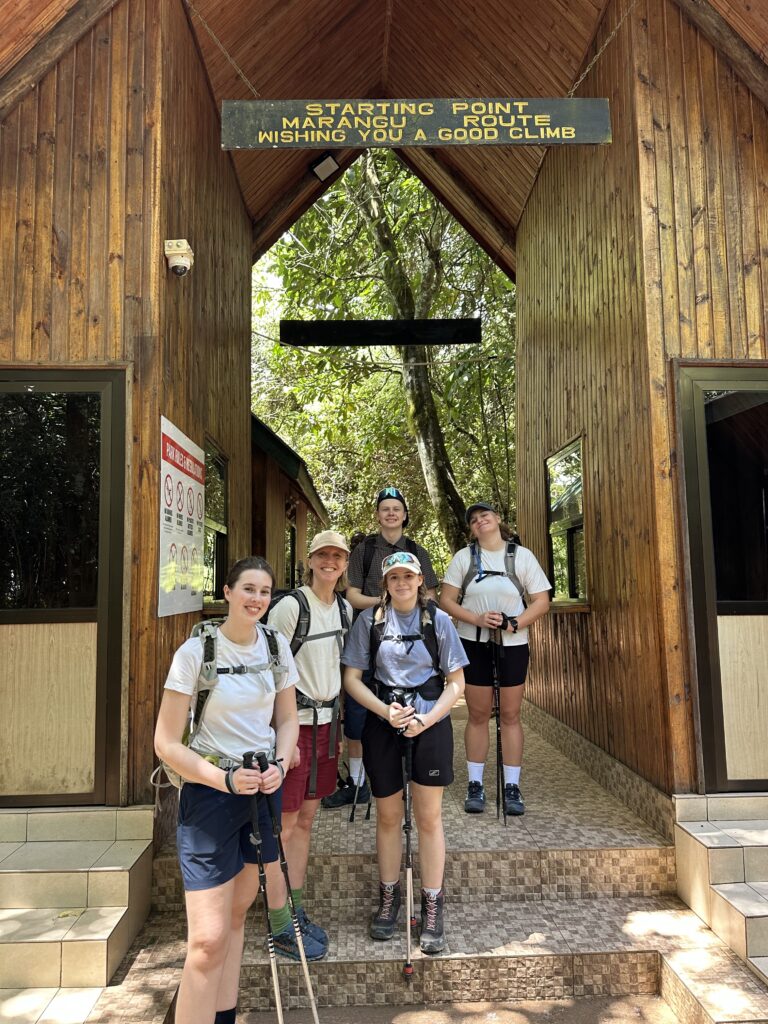
After breakfast at Green Mountain Hotel, you will meet your mountain team and begin your transfer from Arusha to Marangu Gate to complete park registration and formalities. Accompanied by your professional guides and dedicated mountain crew, you will begin your climb through the lush rainforest on Kilimanjaro’s southeastern slopes. The trail winds through dense vegetation, where you may spot colourful birdlife, black-and-white colobus monkeys and blue monkeys among the trees, before continuing uphill to Mandara Hut. Once at camp, you can relax and enjoy your first evening on the mountain before settling into your comfortable mountain hut for the night.
Day 2 - Mandara Hut to Horombo Hut
Elevation: 2,720m → 3,720m
Walking time: 5-7 hours
Distance: Approximately 11-12km
Meals: Breakfast, Lunch & Dinner
Accommodation: Horombo Hut
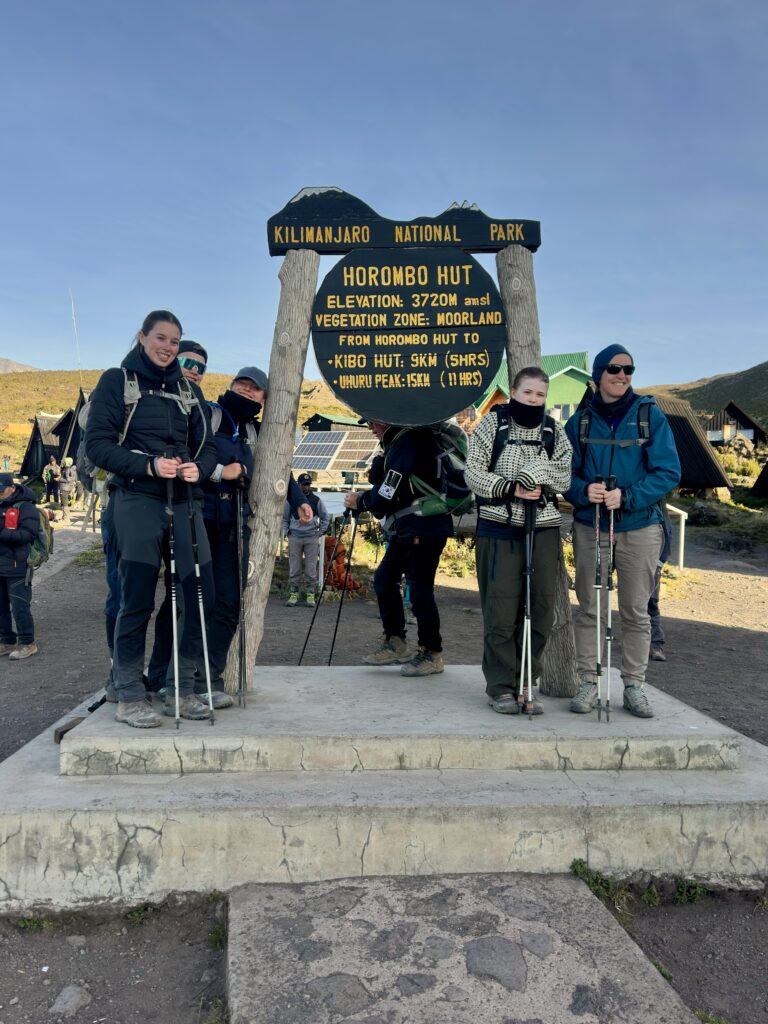
After breakfast, you will leave Mandara Hut and continue your ascent to Horombo Hut, gradually leaving the rainforest behind as you enter Kilimanjaro’s open moorland zone. The trail passes through grasses, heather and distinctive giant lobelias, with increasingly spectacular views towards the peaks of Mawnezi and Kibo. Continuing steadily uphill, you will arrive at Horombo Hut in the afternoon, where you can relax, enjoy dinner and settle into your mountain hut for a well-earned night’s rest ahead of the next stage of your ascent.
Day 3 - Acclimatisation Day at Horombo Hut
Elevation: 3,720m
Walking time: 3-5 hours
Distance: Approximately 5-7km
Meals: Breakfast, Lunch & Dinner
Accommodation: Horombo Hut
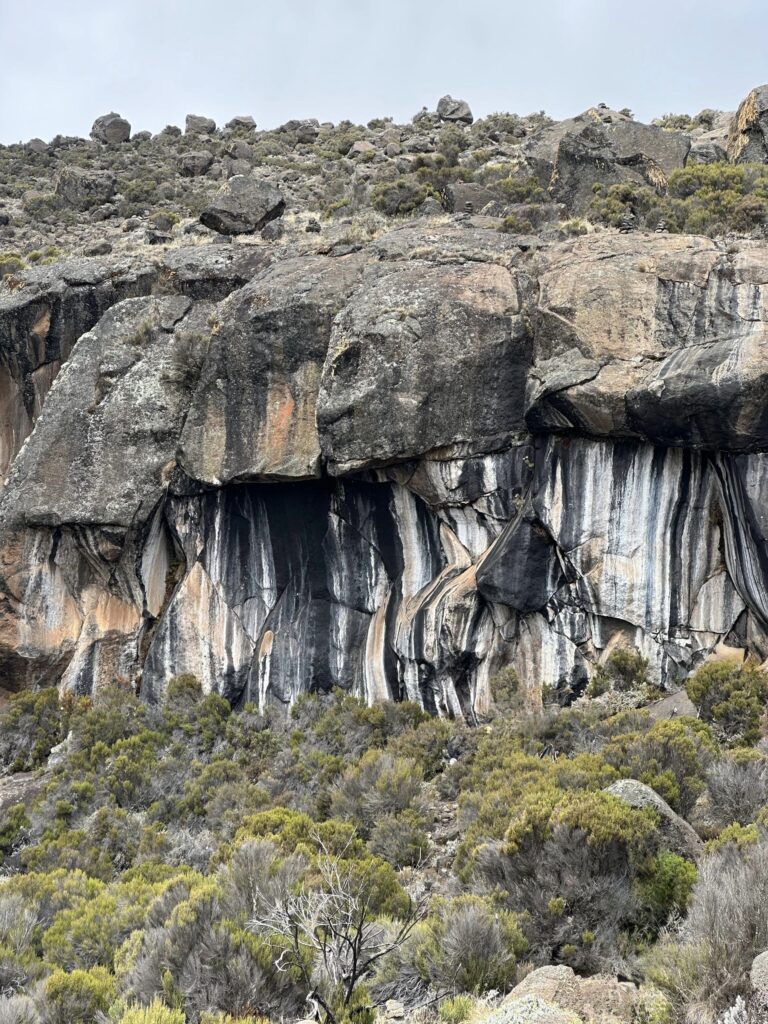
Today is an important acclimatisation day, allowing your body more time to adjust to the increasing altitude before continuing towards Kibo. After breakfast, you will take a short hike into the surrounding moorland, with the option to explore towards Zebra Rocks or higher viewpoints before returning to Horombo Hut. The extra time at altitude helps prepare you for the higher elevations ahead, while offering spectacular views of Mawenzi and Kibo Peak. You will return to camp for lunch before enjoying a relaxed afternoon and another night at Horombo Hut.
Day 4 - Horombo Hut to Kibo Hut
Elevation: 3,720m → 4,720m
Walking time: 5-7 hours
Distance: Approximately 9-10km
Meals: Breakfast, Lunch & Dinner
Accommodation: Kibo Hut
Today, you will leave Horombo Hut and continue towards Kibo, crossing the broad Saddle between the peaks of Mawenzi and Kibo. The vegetation gradually disappears as you enter Kilimanjaro’s alpine desert, creating a stark and dramatic landscape. With Kibo Peak rising ahead, you will continue towards Kibo Hut, your final accommodation before the summit. After an early dinner, we will gather you for a pre-summit briefing before preparing your gear for the night, before retiring to your tent for a few hours sleep.
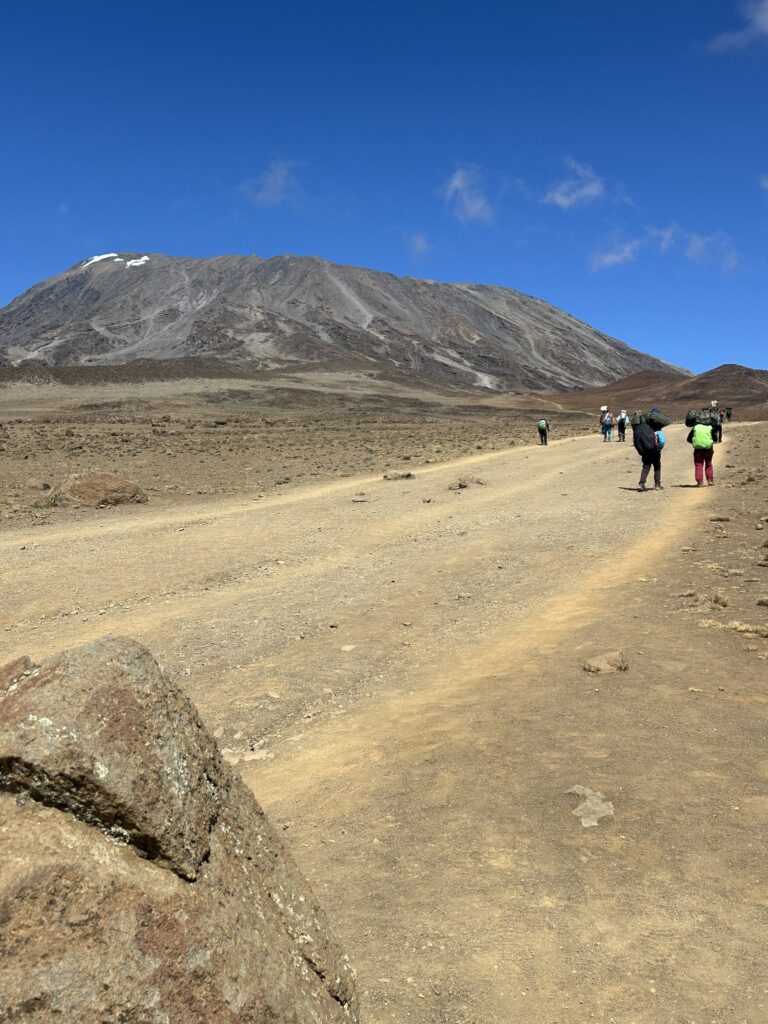
Day 5 - Kibo Hut to Uhuru Peak to Horombo Hut
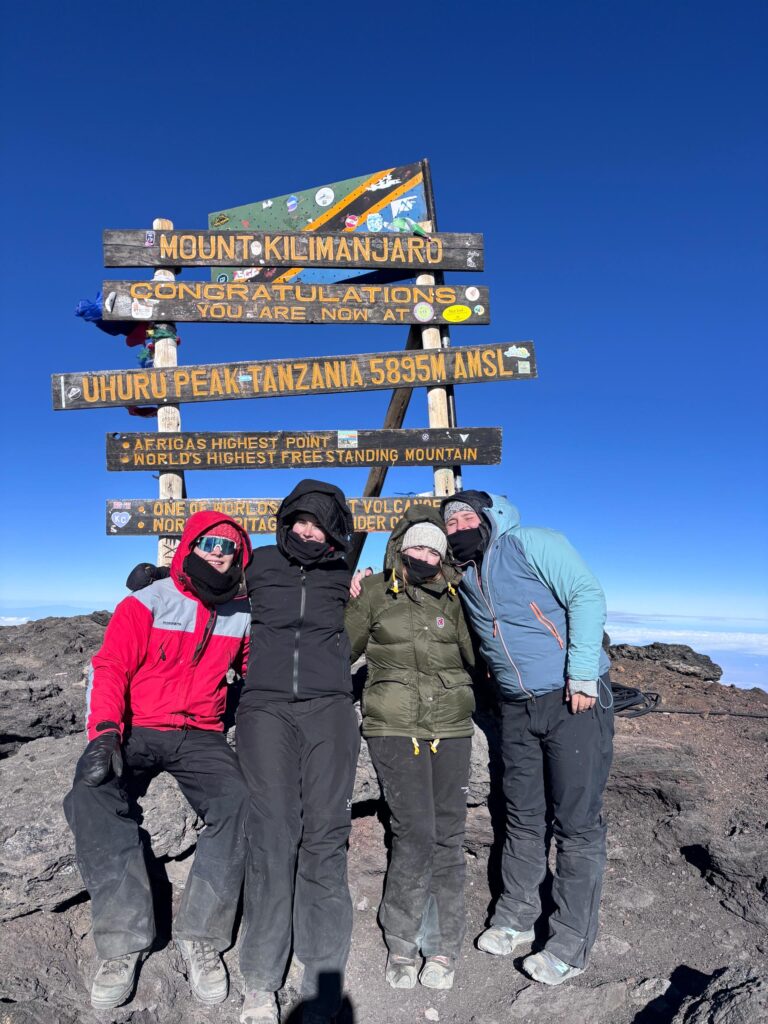
Elevation: 4,720m → 5,895m → 3,720m
Walking time: 10-15 hours
Distance: Approximately 19-21km
Meals: Breakfast, Lunch & Dinner
Accommodation: Horombo Hut
At around midnight, you’ll set off under a sky full of stars for the most challenging and rewarding day of the climb. The summit climb begins in darkness, ascending rocky terrain and steep scree towards Gilman’s Point (5,681m) on the crater rim, before continuing around the rim towards Stella Point (5,756m) and onwards to Uhuru Peak (5,895m), the highest point in Africa. While the trek itself is fairly simple, the high altitude makes even regular physical exercise feel strenuous. After celebrating your incredible achievement and taking in the unforgettable sunrise, you will descend back to Kibo Hut for a short rest and lunch, before continuing to Horombo Hut for a well-earned dinner and night’s rest.
Day 6 - Horombo Hut to Marangu Gate
Elevation: 3,720m → 1,879m
Walking time: 5-6 hours
Distance: Approximately 18-20km
Meals: Breakfast, Lunch & Dinner
Accommodation: Green Mountain Hotel, Arusha
After breakfast, you will begin your final descent from Horombo Hut, retracting your route through the open moorland before gradually re-entering the lush rainforest of Mount Kilimanjaro. As you make your way downhill, you may once again spot colourful birdlife and black-and-white colobus monkeys among the trees. Upon arrival al at Marangu Gate, you will complete park formalities before heading for a well-deserved lunch with the team, where you will receive your summit certificates and celebrate your achievement. After lunch, you will be transferred back to Green Mountain Hotel in Arusha, marking the end of your Kilimanjaro adventure.
Pricing
Travelling with a group? Save more per person with our group discounts.
*Prices shown are per person. Our lowest rates are available for larger groups.
5-Day Marangu Route
6-Day Marangu Route
Group Size
- 1 person
- 2 people
- 3 people
- 4 people
- 5 people
- 6 people
Price Per Person
- $2,325
- $1,970
- $1,870
- $1,770
- $1,670
- $1,570
Group Size
- 1 person
- 2 people
- 3 people
- 4 people
- 5 people
- 6 people
Price Per Person
- $2,420
- $2,050
- $1,950
- $1,850
- $1,750
- $1,650
A typical day on the Marangu Route
Each day on the Marangu Route is carefully paced to help you enjoy the journey while allowing your body time to adjust to the altitude. From comfortable mountain huts at the end of each day to regular breaks on the trail and nourishing meals prepared by your mountain chef, your dedicated team will be there to support you every step of the way.
Morning | Wake Up & Breakfast
Start the day with tea or coffee delivered to your hut, along with a basin of warm water to freshen up. After a hearty breakfast, your guides will brief you on the day’s route before you set off on the trail.
Trekking | Walking at a Steady Pace
Begin your climb through changing landscapes. You’ll walk slowly with your guides, allowing your body time to adjust to the altitude. Regular breaks are taken throughout the day to rest, hydrate and take in the incredible views.
Lunch Break | Refuel & Rest
Enjoy a freshly prepared lunch surrounded by mountain the scenery. Your trekking team will provide a balanced meal to help keep your energy levels up for the afternoon.
Afternoon | Arrive at Camp
Arrive at your next camp and unwind after the day’s trek. You’ll be greeted with a hot drink and a basin of warm water to freshen up before dinner is served.
Evening | Dinner and Preparation
End the day by sharing stories and preparing for tomorrow’s adventure. Your guides will check on your wellbeing, discuss the next day’s route and encourage an early night to help you recover,
Meet your mountain crew
Behind every successful climb is a dedicated team working together to support you from the first step to the summit.
Lead Guide
Leadership · Safety · Experience
Your lead guide oversees your trek from start to finish, setting a comfortable pace, monitoring your wellbeing and helping you navigate the mountain safely.
Assistant Guides
Support · Encouragement · Expertise
Working alongside your lead guide, our assistant guides provide additional support on the trail and encouragement throughout your climb.
Porters
Strength · Support · Dedication
Our dedicated porters carry equipment, camping supplies and your main luggage, allowing you to trek comfortably with just your daypack. They also set up camp!
Mountain Chef
Fresh · Nourishing · Prepared
Your mountain chef prepares fresh, nourishing meals throughout your trek, helping keep you fuelled and ready for each day’s adventure.
Supporting our mountain crew
A Mount Kilimanjaro climb is made possible by a dedicated team of professional guides, porters and chefs who work hard behind the scenes to ensure your safety, comfort and success on the mountain.
At A Travelling Soul Adventure, we believe in responsible and ethical tourism. We are committed to ensuring our mountain crews are treated with respect, paid fairly, and provided with good working conditions. Your trek directly supports local employment and communities in Tanzania.
Tipping is not compulsory, but it is a valued tradition in Tanzania and a meaningful way to show appreciation for the incredible effort and care provided by your mountain crew. Tips are shared among the guides, porters and chefs who contribute to making your adventure unforgettable.
Recommended Tipping Guidelines
While tipping is always optional, it is a valued tradition and a wonderful way to thank your mountain crew.
- Lead Guide - $25/day
- Porters - $12/day per porter
- Chef - $17/day
These are general guidelines and can be adjusted depending on your group size and experience.
We believe tips should be rewarded for exceptional service, not a substitute for fair wages. Our goal is to ensure every member of our mountain team is valued and respected.
What is included?
- Professional, English-speaking mountain guides
- Assistant guides, porters and chefs
- All park fees, camping fees and rescue fees
- Mountain Hut accommodation during the trek (plus 2 nights in Arusha)
- Three meals a day (breakfast, lunch and dinner)
- Mineral drinking water and hot beverages
- Camping equipment
- Private toilet
- Airport transfers
- Group medical kit and emergency oxygen
What is not included?
- International flights
- Travel insurance
- Visa fees
- Personal trekking gear (including sleeping bag)
- Tips
- Personal expenses
- Tips for guides ($25), chef ($17) and porters ($12 per porter) per day
- Additional hotel nights and meals outside itinerary
Frequently asked questions
How difficult is the Marangu Route?
The Marangu Route is considered moderately challenging, with the main challenge being the altitude rather than the technical climbing. The route includes long trekking days and a demanding summit night, with the 5-day itinerary allowing less time for acclimatisation and making the ascent more physically demanding. The 6-day option includes an additional acclimatisation day at Horombo Hut, but both itineraries require good fitness, preparation and a steady pace.
Is the Marangu Route suitable for beginners?
The Maragu Route can be suitable for first-time trekkers, provided you have a good level of fitness and prepare properly for the physical demands of the climb. While the trail is well established and does not require technical climbing experience, the high altitude and demanding summit night make it a challenging trek. For beginners, we recommend the 6-day itinerary, which includes an additional acclimatisation day at Horombo Hut ad allows more time for your body to adjust to the altitude.
What is the difference between the 5-day and 6-day Marangu Route, and which is better?
Both itineraries follow the same Marangu Route and include a summit attempt at Uhuru Peak. The main difference is the pace of the ascent. The 5-day route follows a faster-paced itinerary with no additional acclimatisation day, while the 6-day route includes an extra overnight stay at Horomb Hut, allowing for a more gradual ascent and additional time to acclimatise to the altitude.
The best choice depends on your fitness, experience and preferred pace. The 5-day route is suited to trekkers looking for a shorter, faster-paced ascent, while the 6-day route is ideal if you prefer a more relaxed and less rushed experience. For those who have time, we recommend the 6-day option as it allows you to enjoy the journey at a more comfortable pace and spend an additional night on the mountain.
What is the summit success rate on the Marangu Route?
The Marangu Route has a lower summit success rate than longer Kilimanjaro routes, particularly on the 5-day itinerary. The shorter ascent gives trekkers less time to adjust to the altitude, making the summit attempt more demanding. The 6-day itinerary generally has better summit outcomes due to the additional day at Horombo Hut, but reaching Uhuru Peak is never guaranteed and depends on individual acclimatisation, fitness, preparation and weather conditions on the mountain.
What is the weather like on the Marangu Route?
The weather on the Marangu Route changes significantly as you gain altitude, with conditions ranging from warm and humid in the rainforest to cold and potentially below freezing near Uhuru Peak. The lower sections can experience rain, particularly during the wetter months (March to May and November to December), while higher up the mountain the air becomes much colder and drier. January to March and June to October generally offer the best trekking conditions, although weather can change quickly at any time of year. Marangu’s mountain huts provide shelter from the rain, but it is still important to be prepared for a range of conditions, with good waterproofs and warm layers being essential for the trek and summit night.
What is the scenery like on the Marangu Route?
The Marangu Route offers a varied landscape as you climb through Kilimanjaro’s different ecological zones. The trail begins in lush rainforest, before progressing through open moorland and alpine desert as you gain altitude. Along the way, you’ll experience distinctive giant lobelias, views of Mawenzi and Kibo Peak and increasingly rugged scenery before reaching the arctic zone and the summit of Uhuru Peak (5,895m)
Is the Marangu Route crowded?
The Marangu Route was historically the most popular route on Kilimanjaro, although routes such as Machame and Lemosho are now generally more popular. You can still expect to encounter other trekkers, particularly during the peak seasons of January to March and June to October, and the shared mountain huts can become busy. However, the level of congestion can vary depending on the time of year.
What is the accommodation like on the Marangu Route?
The Marangu Route is the only Kilimanjaro route with permanent hut accommodation, with overnight stays at Mandara, Horombo and Kibo Huts. The huts provide dormitory-style rooms with bunk beds and mattresses, along with communal dining areas and basic toilet facilities. While they offer more shelter from the elements than camping, the accommodation is simple and becomes increasingly basic at higher altitudes, particularly at Kibo Hut (4,720m).
How fit do I need to be for the Marangu Route?
The Marangu Route requires a good level of fitness and should not be underestimated. You will be trekking for several hours each day, often on uneven and steep terrain, with the summit day being particularly demanding due to the long ascent, high altitude and steep sections. You do not need technical climbing experience, but you should be comfortable with sustained uphill walking and long days on your feet. Regular cardiovascular exercise, hill walking and strength training in the months before your trek will help prepare you for the physical demands of the route.
What happens if I become unwell or cannot continue?
Your safety and wellbeing are always our priority. Our professional guides will monitor you throughout the trek for signs of altitude sickness or other concerns and will assess the safest course of action if you become unwell. If you are unable to continue, your guide will assist with the descent and coordinate with the wider mountain team as needed. This is also why comprehensive travel insurance with appropriate mountain rescue cover is essential.
Still have questions?
We’re here to help. Get in touch with our team and we’ll be happy to answer any questions about your Kilimanjaro trek.
Book your trek
Ready to take on Mount Kilimanjaro?
Tell us a little about your plans and we’ll help to create the right trek for you. Whether you already know which route you want to take or you’re not sure where to start, our team can recommend the best option based on your time, experience and goals.
Plan your trek
We'll discuss your plans and help tailor your trek to you.
2.
1.
Tell us your plans
Complete our enquiry form with your preferred dates, group size and route.
3.
Start your adventure
Once everything is arranged, we'll help you to get ready for Kilimanjaro!
Not sure which trek is right for you?
No problem – our team are here to help you choose.